Makkah Ziyarat by Coaster: Explore the Holy City’s Historic and Sacred Places
Visiting Makkah is a dream for Muslims around the world. Every year, millions of pilgrims travel to this blessed city to perform Hajj and Umrah, offer prayers at Masjid al-Haram, and experience the spiritual atmosphere of Islam’s holiest destination. Along with worship, many visitors also wish to explore the important Islamic landmarks that hold deep historical and religious significance. One of the most convenient ways to discover these places is through Makkah ziyarat by Coaster.
Makkah is home to numerous historical locations connected with the life of Prophet Muhammad (PBUH), the early days of Islam, and the history of the prophets. From the famous Cave of Hira to the plains of Arafat, each location has a story that can help visitors understand Islamic history more deeply.
However, visiting several locations during your stay can be challenging if you don’t have suitable transportation. The roads can be busy, the weather can be hot, and some historical sites are located far from the central Haram area. A Coaster provides a practical transportation option for families, groups, and pilgrims who want to explore these places together.
Whether you’re visiting Makkah for the first time or returning for another Umrah, a well-planned ziyarat journey can make your stay more meaningful. You can learn about important Islamic events, appreciate the history of the holy city, and spend valuable time with your family and fellow pilgrims.
In this guide, we’ll explore the benefits of visiting Makkah’s historic places by Coaster, the popular ziyarat locations, travel preparation tips, and everything you should know before starting your journey.
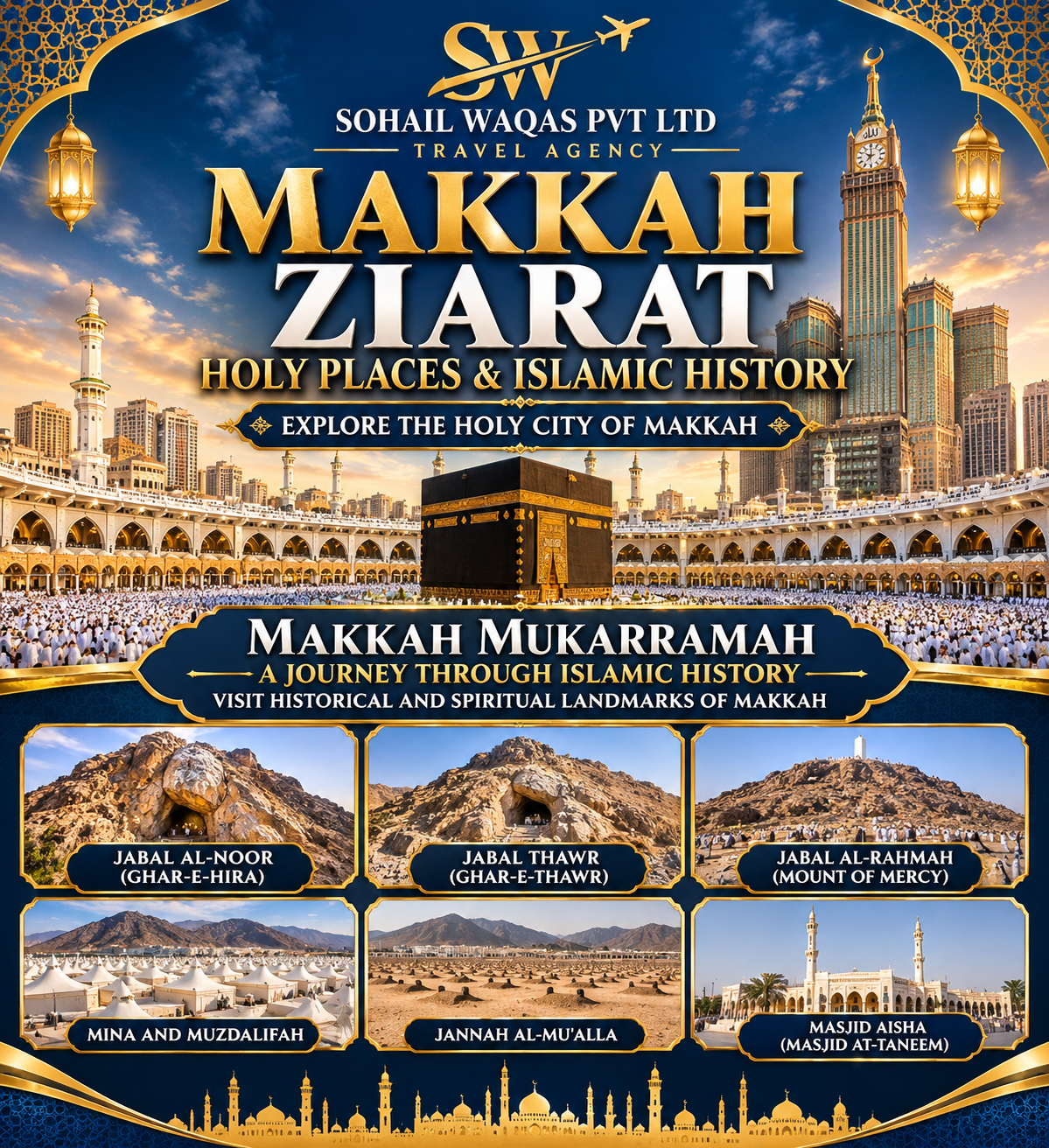
What Is Makkah Ziyarat?
Makkah ziyarat refers to visiting historical and religiously significant places in and around the holy city of Makkah. These locations are associated with important events in Islamic history, the life of Prophet Muhammad (PBUH), and the early Muslim community.

Ziyarat is an opportunity to learn, reflect, and remember the struggles and sacrifices made during the early days of Islam.
Many pilgrims include ziyarat in their travel plans after completing Umrah or during their free time in Makkah. It allows them to explore places beyond Masjid al-Haram and understand the historical background of the city.
Some popular locations include:
-
Jabal al-Noor and the Cave of Hira.
-
Jabal Thawr.
-
The plains of Arafat.
-
Mina.
-
Muzdalifah.
-
Jannat al-Mu’alla.
-
Masjid al-Jinn.
-
Hudaybiyyah.
-
Masjid al-Taneem.
Each destination has its own historical importance. Some places can be viewed directly from the vehicle, while others may require walking or additional arrangements.
Why Choose Makkah Ziyarat by Coaster?
Transportation plays an important role in making your ziyarat experience comfortable. Makkah has many historical locations, and visiting them all using separate transport arrangements can become difficult.
Choosing Makkah ziyarat by Coaster offers a convenient way to travel between different destinations without worrying about arranging a separate vehicle for every stop.
Here are some reasons why a Coaster can be a suitable choice.
1. Comfortable Group Transportation
A Coaster is designed to carry multiple passengers, making it useful for families, friends, and groups of Umrah pilgrims.
Instead of arranging several small vehicles, your group can travel together. This makes communication easier and helps everyone follow the same travel schedule.
For example, if you’re traveling with relatives or a group of fellow pilgrims, you won’t need to worry about different vehicles arriving at different times.
2. Convenient Travel Between Ziyarat Locations
Many important historical locations are spread across different areas of Makkah.
Traveling between them requires proper planning, especially when you have limited time. A Coaster provides a practical way to move from one location to another while keeping your group together.
You can plan your stops in advance and discuss the expected schedule with your transport provider.
3. Suitable for Families and Elderly Passengers
Traveling with children or elderly family members requires extra attention.
A shared group vehicle can make transportation easier because everyone can travel together. It also reduces the need for family members to coordinate multiple taxis.
However, passengers should consider their individual mobility needs. Some ziyarat locations involve walking, uneven ground, or climbing. A comfortable vehicle cannot remove those physical challenges.
4. Better Group Coordination
When several people travel together, coordination becomes important.
A Coaster helps simplify the journey because passengers can gather at one meeting point and travel according to an agreed schedule.
This is particularly helpful for:
-
Umrah groups.
-
Pakistani pilgrims.
-
Family groups.
-
Friends traveling together.
-
Elderly passengers accompanied by relatives.
-
Visitors who prefer organized transportation.
5. More Organized Sightseeing
A planned ziyarat journey allows you to make better use of your available time.
You can identify the places you want to visit, arrange the route, and decide how long to spend at each stop.
This helps prevent unnecessary delays and makes the experience more enjoyable.
Famous Places to Visit During Makkah Ziyarat
Makkah has many locations that hold a special place in Islamic history. Below are some well-known destinations that visitors may include in their sightseeing plans.
Actual access, stopping points, and visiting arrangements can change depending on local regulations and road conditions.
1. Jabal al-Noor and the Cave of Hira
Jabal al-Noor is one of the most famous historical mountains in Makkah.
It is known for the Cave of Hira, where Prophet Muhammad (PBUH) received the first revelation of the Holy Quran through Angel Jibreel (AS).
This event marked the beginning of his prophethood and changed the course of human history.
The mountain is located northeast of Masjid al-Haram. The Cave of Hira is situated near its summit.
Many pilgrims wish to see this important location because of its connection with the beginning of Islam.
Visitors should understand that reaching the cave requires a challenging uphill climb. It isn’t a suitable activity for everyone, particularly elderly people or those with mobility difficulties.
A Coaster can help transport your group to an appropriate nearby stopping area, subject to road access. Visitors can then decide whether they wish to explore the mountain on foot.
2. Jabal Thawr
Jabal Thawr is another important mountain associated with Islamic history.
It contains the Cave of Thawr, where Prophet Muhammad (PBUH) and Hazrat Abu Bakr (RA) took shelter during their migration from Makkah to Madinah.
Their stay in the cave is an important part of the Hijrah story.
This event teaches Muslims about patience, trust in Allah, courage, and faith during difficult circumstances.
Many visitors include Jabal Thawr in their ziyarat itinerary to remember this historical event.
Like Jabal al-Noor, reaching the cave requires a difficult climb. Visitors who only want to see the mountain should plan an appropriate viewing stop rather than attempting the climb.
3. Mina
Mina is an important location associated with the Hajj pilgrimage.
It is located within the holy area of Makkah and is famous for its large tent city, where pilgrims stay during specific days of Hajj.
During Hajj, millions of Muslims gather in Mina as part of the pilgrimage rituals.
The area is also associated with the symbolic stoning of the Jamarat.
For visitors, seeing Mina can provide a better understanding of the scale and organization of the Hajj pilgrimage.
A ziyarat tour may include a drive through accessible areas, depending on traffic, seasonal restrictions, and local arrangements.
4. Arafat
The plain of Arafat is one of the most significant locations in the Hajj pilgrimage.
It is where pilgrims gather on the ninth day of Dhul Hijjah to perform Wuquf-e-Arafah, an essential pillar of Hajj.
Jabal al-Rahmah, also known as the Mountain of Mercy, is located in the Arafat area.
This location is especially meaningful for Muslims because the Day of Arafah is associated with prayer, repentance, forgiveness, and remembrance of Allah.
Visitors often wish to see this place during their stay in Makkah.
If you’re planning a ziyarat trip, remember that access arrangements can be different during the Hajj season. Always follow local instructions.
5. Muzdalifah
Muzdalifah is another important destination associated with Hajj.
Pilgrims travel to Muzdalifah after leaving Arafat on the ninth day of Dhul Hijjah.
They spend part of the night there and perform important acts of worship before proceeding towards Mina.
Muzdalifah helps visitors understand how different locations play a role in the Hajj journey.
During a sightseeing trip, visitors may be able to see accessible parts of the area, depending on the time of year and local traffic restrictions.
6. Jannat al-Mu’alla
Jannat al-Mu’alla is a historic cemetery in Makkah.
It is also known as Al-Ma’la Cemetery and has a significant place in Islamic history.
Several members of Prophet Muhammad’s (PBUH) family and other important early Muslims were buried here.
The cemetery is closely associated with the history of the early Muslim community in Makkah.
Many visitors wish to learn about its historical importance and remember the people connected with the early days of Islam.
Visitors should respect cemetery regulations and local visiting arrangements. Entry or access may be restricted.
7. Masjid al-Jinn
Masjid al-Jinn is a well-known mosque in Makkah.
It is associated with the historical account of a group of jinn listening to the recitation of the Holy Quran by Prophet Muhammad (PBUH).
The incident is mentioned in the Quran, particularly in Surah Al-Jinn.
The mosque is located near the area of Jannat al-Mu’alla.
Visitors interested in Islamic history often include this location in their ziyarat plans.
It is a useful stop for learning about an important event mentioned in Islamic teachings.
8. Hudaybiyyah
Hudaybiyyah is a historically important location outside the central area of Makkah.
It is associated with the Treaty of Hudaybiyyah, an agreement made between Prophet Muhammad (PBUH) and the Quraysh.
The treaty took place in the sixth year after Hijrah.
Although some Muslims initially viewed the agreement as difficult, it later became an important turning point in Islamic history.
It helped create conditions for the spread of Islam and eventually led to major developments in the relationship between the Muslims and Quraysh.
Visitors interested in the history of Islam may wish to include Hudaybiyyah in their journey, subject to travel time and access.
9. Masjid al-Taneem
Masjid al-Taneem is also known as Masjid Aisha.
It is an important mosque for pilgrims who wish to enter the state of Ihram for Umrah.
The mosque is located outside the Haram boundary and is a commonly used Miqat location for people in Makkah who intend to perform another Umrah.
Many visitors include it in their travel plans because of its connection with the Islamic history of Umrah.
If you’re planning to perform Umrah, make sure you understand the relevant Ihram requirements and seek guidance from a knowledgeable scholar when needed.
Popular Makkah Ziyarat Locations at a Glance
The following table provides a quick overview of some well-known locations.
| Ziyarat Location | Historical Importance | Visitor Experience |
|---|---|---|
| Jabal al-Noor | First revelation of the Quran | Mountain viewing and optional climb |
| Jabal Thawr | Hijrah and Cave of Thawr | Mountain viewing |
| Mina | Important Hajj rituals | View the tent city |
| Arafat | Wuquf during Hajj | Visit the plain and view Jabal al-Rahmah |
| Muzdalifah | Important Hajj destination | View accessible areas |
| Jannat al-Mu’alla | Historic Muslim cemetery | Learn about early Islamic history |
| Masjid al-Jinn | Historical account involving jinn | Mosque visit, subject to access |
| Hudaybiyyah | Treaty of Hudaybiyyah | Historical sightseeing |
| Masjid al-Taneem | Miqat for entering Ihram | Mosque visit |
How to Plan Makkah Ziyarat by Coaster
A successful ziyarat trip starts with good planning.
You don’t need a complicated schedule, but you should understand your group’s needs and the locations you want to visit.
Here is a simple step-by-step approach.
Step 1: Decide Who Will Travel
Start by identifying the number of people in your group.
Consider whether you’re traveling with:
-
Family members.
-
Children.
-
Elderly passengers.
-
Friends.
-
Other Umrah pilgrims.
The number of passengers will help you select a suitable vehicle.
Always confirm the permitted seating capacity before making arrangements.
Step 2: Choose Your Preferred Ziyarat Locations
Make a list of the places you want to visit.
Some visitors prefer locations connected with the life of Prophet Muhammad (PBUH), while others want to explore important Hajj destinations.
You can discuss your preferences with your transport provider and plan a suitable route.
It’s better to select destinations according to your available time rather than trying to visit every location in one trip.
Step 3: Select a Suitable Time
Timing can have a major impact on your experience.
Makkah can become very busy during peak Umrah periods, Ramadan, and Hajj season.
Consider the following factors:
-
Traffic conditions.
-
Weather.
-
Your group’s energy level.
-
Prayer times.
-
Seasonal access restrictions.
-
Expected time at each destination.
Early planning can help you avoid unnecessary delays.
Step 4: Confirm Transportation Arrangements
Before your trip, confirm all important details with your transport provider.
Ask about:
-
Vehicle seating capacity.
-
Pickup location.
-
Pickup time.
-
Planned destinations.
-
Expected duration.
-
Waiting arrangements.
-
Any restrictions on particular routes.
Clear communication helps prevent misunderstandings on the day of travel.
Step 5: Prepare for the Journey
Carry essential items such as:
-
Drinking water.
-
Comfortable footwear.
-
Weather-appropriate clothing.
-
Mobile phones.
-
Identification documents.
-
Necessary personal medicines.
-
A small bag for personal belongings.
If you’re traveling with elderly passengers, consider their comfort and walking requirements before selecting the destinations.
Step 6: Follow the Agreed Schedule
Once the journey begins, try to follow the planned schedule.
Give your group enough time to explore each location, but avoid unnecessary delays that may affect other stops.
If traffic or local restrictions cause changes, remain flexible.
A relaxed journey is often more enjoyable than rushing through several places.
Who Should Choose a Coaster for Makkah Ziyarat?
A Coaster can be a useful option for different types of visitors.
Families Visiting Makkah
Families often want to explore historical places together.
A group vehicle makes it easier to travel with relatives and stay organized throughout the journey.
Parents can also coordinate their children’s needs more easily when everyone travels together.
Pakistani Umrah Pilgrims
Many Pakistani pilgrims visit Makkah with family members, friends, or organized Umrah groups.
For these visitors, Makkah ziyarat by Coaster can be a convenient transportation choice.
It provides an opportunity to explore important Islamic landmarks while traveling with other members of the group.
Elderly Visitors
Older pilgrims may prefer a vehicle that allows them to avoid arranging multiple separate journeys.
A Coaster can help reduce transportation-related difficulties.
However, remember that some locations require considerable walking. Always choose stops according to the physical ability of your passengers.
Friends and Group Travelers
Groups of friends often want to explore Makkah together.
Traveling in one vehicle can make the experience more organized and enjoyable.
Everyone can discuss the historical locations, share information, and enjoy the journey as a group.
Benefits of Exploring Islamic History During Your Makkah Visit
Ziyarat is not simply about visiting different locations. It can also be a valuable learning experience.
Here are some benefits of exploring the historic places of Makkah.
A Better Understanding of Islamic History
Reading about Islamic history is useful, but seeing locations connected with historical events can make those lessons more meaningful.
For example, visiting Jabal al-Noor can encourage you to learn more about the first revelation.
Similarly, seeing the area of Hudaybiyyah can help you understand the importance of patience and peaceful agreements in Islamic history.
A Stronger Connection With the Seerah
The Seerah is the life story of Prophet Muhammad (PBUH).
Many locations in Makkah are connected with important moments from his life.
Visiting these places can encourage you to study the Seerah more carefully and understand the challenges faced by the early Muslims.
An Educational Experience for Children
If you’re traveling with children, ziyarat can be an excellent opportunity to introduce them to Islamic history.
Parents can explain important events in simple language.
For example, they can share the story of Hijrah when visiting the area of Jabal Thawr.
These experiences can help children develop an interest in learning about Islam.
Time for Reflection and Gratitude
Makkah is a special destination for Muslims.
Exploring its historic locations can remind you of the sacrifices made by the early Muslim community.
It can also encourage reflection on patience, faith, kindness, and devotion to Allah.
Common Mistakes to Avoid During Makkah Ziyarat
Even a simple sightseeing journey can become stressful if you don’t prepare properly.
Avoid these common mistakes to make your visit more comfortable.
1. Trying to Visit Too Many Places
One common mistake is creating an unrealistic itinerary.
Makkah has many historical locations, but visiting all of them in a limited period may not be practical.
Choose the destinations that matter most to your group.
2. Ignoring Weather Conditions
Makkah can experience very high temperatures, particularly during the warmer months.
Long outdoor visits can become uncomfortable.
Carry water, wear suitable clothing, and avoid unnecessary physical activity during extreme heat.
3. Not Considering Elderly Passengers
Some historical locations involve climbing or walking on uneven surfaces.
Don’t assume every passenger can manage these activities.
Discuss mobility needs before finalizing the route.
4. Failing to Confirm Pickup Details
Always confirm the pickup location and timing before departure.
Hotels and accommodation buildings may have different vehicle access arrangements.
Clear instructions can save time and reduce confusion.
5. Ignoring Local Rules
Some locations have restricted access or special arrangements during busy periods.
Visitors should follow instructions from local authorities and avoid entering prohibited areas.
6. Rushing Through Historical Locations
Ziyarat is more meaningful when you understand the history behind each place.
Instead of taking photographs and immediately moving to the next destination, spend some time learning about the location.
A little preparation can make the journey more educational.
Practical Tips for a Comfortable Ziyarat Journey
Before starting your journey, keep these practical suggestions in mind.
Wear comfortable footwear: Some locations require walking, so choose shoes or sandals that are suitable for the terrain.
Carry drinking water: Staying hydrated is essential, particularly when visiting outdoor locations.
Keep your phone charged: A charged mobile phone helps you communicate with other passengers and your transport provider.
Respect prayer times: Plan your schedule around the daily prayers so you can maintain your worship routine.
Follow local instructions: Access to certain areas may change depending on local arrangements.
Protect your belongings: Keep your personal items secure while moving between destinations.
Travel with realistic expectations: Traffic, weather, and crowd conditions can affect the journey.
Learn about each destination: Reading a little about the historical background before your visit can make every stop more meaningful.
Makkah Ziyarat by Coaster vs. Separate Taxi Travel
When planning sightseeing in Makkah, visitors may consider different transportation options.
A Coaster and separate taxi travel can both be useful, depending on the size and needs of your group.
| Feature | Coaster | Separate Taxi Travel |
|---|---|---|
| Group travel | Suitable for larger groups within seating capacity | May require multiple vehicles |
| Family coordination | Easier to keep everyone together | Requires coordination between vehicles |
| Group schedule | One shared travel plan | Different vehicles may have different arrival times |
| Passenger management | Centralized group coordination | More individual coordination |
| Best suited for | Families and organized groups | Individuals and smaller groups |
The right choice depends on your group size, preferred destinations, and travel requirements.
If everyone wants to travel together, a Coaster may offer a more organized experience.
Why Proper Transportation Matters in Makkah
Makkah is one of the busiest religious destinations in the world.
During peak seasons, roads around important locations can become crowded. Pilgrims also need to manage their worship schedules, hotel arrangements, and personal activities.
Reliable transportation helps make sightseeing easier.
A well-organized journey allows you to focus on the historical importance of each destination instead of worrying about how to reach the next location.
This is particularly helpful when you’re traveling with a group.
Before confirming your journey, communicate your expectations clearly and make sure the vehicle is suitable for your passengers.
Make Your Makkah Visit More Meaningful
Your visit to Makkah is a special opportunity to strengthen your connection with Islamic history.
From the first revelation at the Cave of Hira to the events of Hijrah, from the importance of Arafat to the Treaty of Hudaybiyyah, the holy city has countless lessons to offer.
A planned sightseeing journey allows you to explore these locations in an organized way.
With suitable transportation, you can travel with your family or group, visit important landmarks, and learn more about the history of Islam.
Choosing Makkah ziyarat by Coaster can make the transportation part of your journey easier, especially when you’re traveling with several passengers.
The key is to plan ahead, select suitable destinations, respect local regulations, and give yourself enough time to enjoy each stop.
https://www.haramainrenter.com/makkah-ziyarat-by-coaster-explore-holy-places-comfortably/
4. FAQ Section
1. What is included in Makkah ziyarat by Coaster?
A typical ziyarat itinerary may include famous Islamic historical locations such as Jabal al-Noor, Jabal Thawr, Mina, Arafat, Muzdalifah, Jannat al-Mu’alla, and Masjid al-Jinn. The exact destinations depend on the agreed itinerary, available time, and local access arrangements.
2. Is a Coaster suitable for family ziyarat in Makkah?
Yes. A Coaster can be a practical option for families because several passengers can travel together in one vehicle, subject to its permitted seating capacity. It also makes group coordination easier during sightseeing.
3. Which places should I visit during Makkah ziyarat?
Popular destinations include the Cave of Hira, Jabal Thawr, Mina, Arafat, Muzdalifah, Jannat al-Mu’alla, and Hudaybiyyah. Your choice should depend on your interests, available time, physical ability, and local visiting arrangements.
4. How long does a Makkah ziyarat tour take?
The duration depends on the number of destinations, traffic conditions, time spent at each location, and seasonal restrictions. It’s best to discuss your preferred itinerary and schedule with your transportation provider before starting the journey.
5. Can elderly people join a Makkah ziyarat tour?
Yes. Elderly visitors can join a sightseeing trip, but the itinerary should consider their comfort and mobility. Some locations involve climbing or walking, so it’s better to select accessible viewing points and avoid physically demanding activities when necessary.
6. What should I carry during Makkah ziyarat?
Carry drinking water, comfortable footwear, weather-appropriate clothing, your mobile phone, identification documents, and any personal essentials. If you’re traveling with children or elderly passengers, prepare additional items according to their needs.
5. Contact Details
Book Your Makkah Ziyarat Transportation
Planning to explore the historic and Islamic landmarks of Makkah with your family, friends, or Umrah group?
Make your travel arrangements in advance and discuss your preferred ziyarat destinations, pickup location, schedule, and group requirements.
For inquiries and transportation arrangements, contact:
M. Waqas Siddique
Phone: +92 303 5655552
M. Sohail Siddique
Phone: +92 334 2777123
Get in touch to discuss your travel requirements and plan a comfortable sightseeing journey in the holy city of Makkah.
Explore the history of Makkah, visit important Islamic landmarks, and make your blessed journey more memorable.